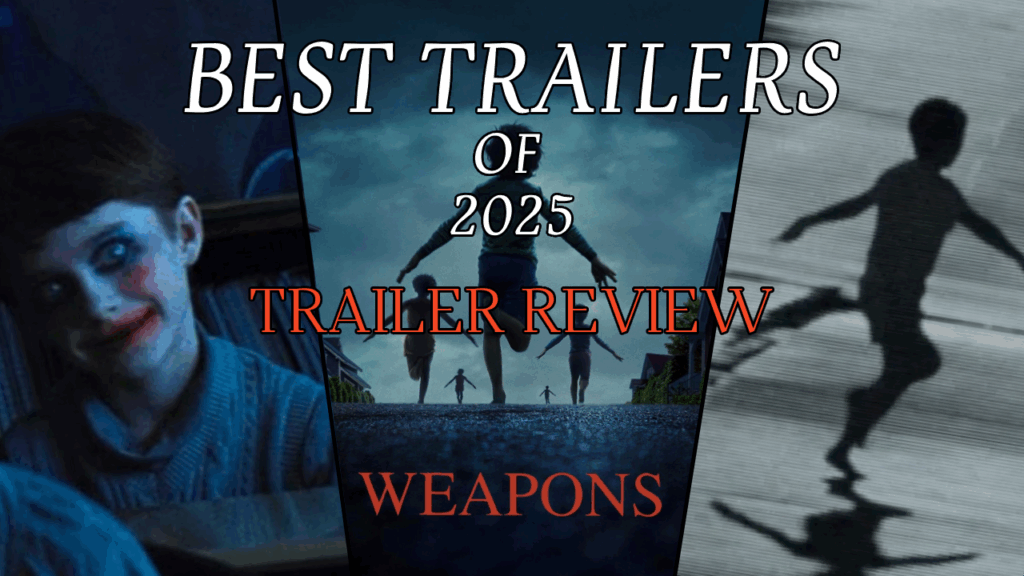
Written, directed, and produced by Zachary Cregger, Weapons (2025) is his second horror film, and he seems to have already established a fresh, unpredictable style.
His previous film, Barbarian (2022), received critical acclaim for these same qualities and he appears to only be improving his craft.
I base this on the trailers I will be reviewing below. They perfectly demonstrate that the film will be fresh and horrifying in an unexpected, unconventional way. As far as horror movie trailers and marketing go, Weapons is killing it.
All this makes me genuinely excited for this film.
So, what better way to anticipate the upcoming release on August 8, 2025 than reviewing these trailers one more time and breaking down what makes them so effective?
Alright ramblers, let’s get rambling.
What Makes A Good Scary Movie Trailer:
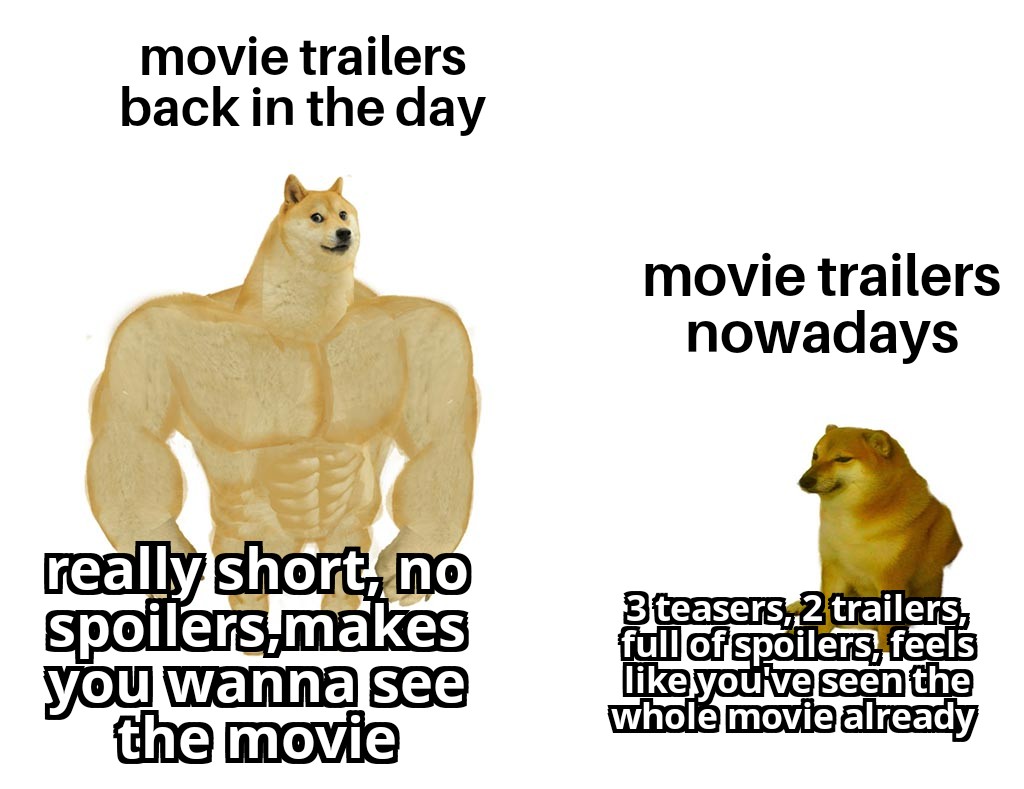
An exemplary horror trailer steadily and deliberately builds intrigue and tension by not revealing too much information and keeping the audience guessing.
Essentially, a trailer should make you curious about a film. Or else, why would you pay to see it?
Audiences watch films to have their questions answered. For example: is the hero going to win? What’s the villain’s motivation? What’s the big plot twist? Will it be fun and entertaining, or absolutely terrifying?
If a free trailer answers too many of these kinds of questions, the audiences lose their intrigue, and it becomes harder to stomach the ticket price.
All the best horror trailers show information to the audience at a very deliberate pace. Leaving out details naturally makes something scarier.
This is because one of the most common and primal fears in people is the fear of the unknown. The more light shed on something, the less scary it becomes.
Weapons (2025) Trailers Hit The Bullsye:
The official trailers for Weapons serve as masterclasses in creating intrigue.
I’ll explain their individual strengths in more detail below, but what both trailers do perfectly is drop hints to allow the viewer to try to anticipate the overarching twist of the film.
They really nail the idea of showing, instead of telling the viewer information, while still revealing nothing at the same time.
Therefore, by not giving away all the details of the film, the Weapons trailers excel because the marketing is based around keeping the audience guessing and being deliberate with what information is shown, when, and how.
Official Trailer 1 Breakdown:
First of all, the choice to have a child narrate a disturbing event as if it was a scary campfire story is a far more interesting way to deliver exposition than title cards interwoven between random shots.
At 0:07, the trailer perfectly sets the scene of a quiet suburb and bustling elementary school about to have their long peace violently disturbed.
While the suburb is in uproar, the classroom at 0:22 remains eerily silent. Instead of seeing happy and rambunctious kids, we get a somber, .unsettling picture of an empty classroom.
The sequence from 0:30 to 0:50 is an example of great visual storytelling, as the camera puts the viewer directly into the perspective of the child with real-time narration. It helps reinforce the idea that a young child walking off and vanishing into the middle of the night is terrifyingly real.
These first 50 seconds deliver exposition at an almost perfect pace. Instead of overwhelming us with unnecessary details and revealing all the film’s most interesting shots, the Weapons trailer lets the tension build and the stakes sink in.
It’s not until around 0:55 that we even catch our first glimpses of the main cast with Mrs. Gandy played by Ruth from Ozark (Julia Garner) and Archer played by Thanos (Josh Brolin). This is a great example of how deliberate the trailer is with the pace at which it gives information away.
The shot of the missing kids at 0:57 serves as excellent visual storytelling. On the screen we can see that these kids are approximately the same age and size, but it’s an otherwise diverse group of kids from different households. This further reinforces the parents’ concern that Mrs. Gandy is the only connecting factor. It provides us information but also limits us to only knowing what the characters know in that moment. This is another example of being perfectly deliberate with what is revealed to the audience in a trailer.
At 1:14 it looks like the kids are playing “Heads Up, 7-Up!” if anyone knows that game.
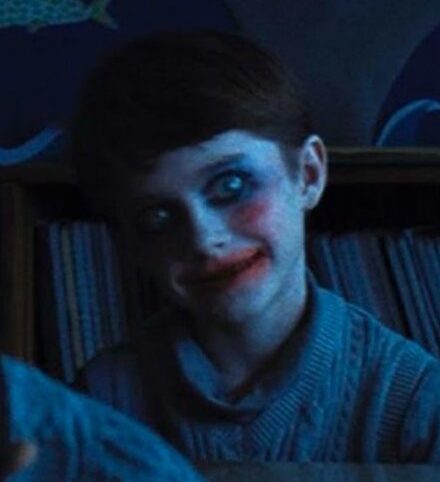
Honestly, I can’t really take the kid at 1:17 seriously.
Even the montage sequence from 1:22 to 1:40 is well-paced. All these quick action shots may seem like it gives a lot away, but the shots are so quick it’s impossible to connect them to make a whole picture. Like being given just a few random pieces of a puzzle, it makes you more invested in solving it
As the music in the montage ramps up, so does the action and quickness of the cuts. We catch glimpses of kids running out of windows, people getting manhandled, and some weird black vomit. This starts to paint a picture, but it’s more of a Picasso piece.
At 1:46 “This is where the story truly starts” after the kid opens the door, implies that the disappearances were just the first in a long chain of unfortunate events. As we can also tell from the montage. Great way of telling us they have more surprises in store.
Official Trailer 2 Breakdown:
Since this second trailer was the follow-up two months later, it naturally reveals more information. Still, the pacing and control of information is so tight that it makes audiences come up with a theory, only to have the next shot dispute it.
The way these kids run at 0:10 is very creepy. It really nails that “Pied-Piper” vibe where the kids seem happily, yet hopelessly, hypnotized by something.
At 0:12, we get another shot of the kids’ missing poster, but we now see that a reward is being offered. This lets us know that the parents are desperate and will go to great lengths to find their kids.
This trailer puts Mrs. Gandy directly on the stand, at 0:16, and she shakily defends her innocence. In the first trailer, audiences could only suspect her to be at the center of this situation, but now we see her (figuratively) on trial.
We see shots of search teams with K-9s and they appear to have not found anything in common spots for lost kids to be. This implies the kids are lost beyond normal means. A great example of visual storytelling that lets the audience infer this without being directly told.
At 0:25, Josh Brolin’s character, Llewelyn Mo- I mean, Archer, reminds us what’s at stake here and why Mrs. Gandy is a prime suspect.
The questions asked at 0:32 are the same ones asked by the audience. Why only Mrs. Gandy’s class? What makes her or her students so special? This shows that the audience only knows as much as the characters in the film. Further exemplifying how carefully the trailer controls what the audience learns.
Mrs. Gandy saying, “I love those kids” at 0:36, is such a quick but important shot from an investigative standpoint. She describes the kids in the present tense, suggesting that she either knows they’re still alive or she’s hoping they are. Still, it’s not enough to give the parents or the audience full confidence that she’s not involved in some way. Maybe she had some unhealthy obsession and decided to kidnap them? Excellent example of not giving the audience too much information and keeping viewers guessing.
Starting at 0:39, very similar to the first trailer, we have the same child narrating while we see extended shots of the kids running creepily into the night. This is an example of great pacing with information as it just slightly expands on what audiences already know, instead of overplaying its hand.
At 0:45, the narrator tells us, “A lot of people die in a lot of really weird ways in this story, but you’re not gonna find it in the news.” At this point, the marketing team is just toying with us. They are essentially saying that audiences can create as many theories as they want, but the film is gonna provide something completely unexpected.
In his kitchen, at 0:50, Archer tells us “those kids walked out of those homes. No one pulled them out. No one forced them.” Once again very deliberately reinforcing that the audience only knows what the characters know.
There’s a shot in the previous trailer where a child steps over a line of salt, but we get much more context for it in this trailer. We see, presumably, his parents standing behind the salt line and they are almost entirely expressionless. The voiceover tells us “There’s something very, very, wrong going on.” But the kid looks completely normal. This bit of verbal and visual contradiction makes the audience question what theories or conclusions they’ve formed at this point. Another great example of information not given at first but deliberately given later.
After this scene we get a dramatic sting and cut to an adult male in terrible shape, running like the children. He seems to be frantically looking for someone or something. The inclusion of this information is entirely out of left field and Swiss-cheeses fan theories up until this point. The marketing team is saying, “you think you know what’s going on, but you don’t. And that’s why you need to come see it.”
At 1:26, we see Mrs. Gandy approach a window mostly covered up by newspaper clippings, but there’s a conveniently placed crack in the middle. She catches a glimpse of someone in bed and then gasps at something she saw but we didn’t. This is a very deliberate cutoff of information. A lesser trailer might’ve let us see what she saw, trying to show off instead of build intrigue.
The montage sequence in this trailer is insane. If the objective of the first trailer was to guarantee mystery, this one guarantees pure chaos. We now get much clearer glimpses of the characters and the horror they’re about to experience.
The line at 1:32, “I’ve never seen anything like that in my life” is just further teasing the audience. Once again, you think you’ve seen this twist before, but you haven’t.
The change in narration at 1:37, saying “are you watching?”. is either a clever 4th wall break or a narrative device or both. The trailer is telling the audience to take full notice of this shift from horror to chaos. I don’t want to delve too much into this sequence because I think individually analyzing the shots will take away from the montage effect.
At 1:46 we get the completed title card with the wording being made up of the kids’ missing poster. Perhaps directly implying the kids themselves are the weapons?
The bell ringing scene at 1:51 is so deliberately included just to really poke holes in fan theories. Before this scene, people are maybe thinking, “is it demonic possession? Zombie virus?” but now audiences must ponder how this blatantly numbered bell fits into the whole puzzle.
Having the final voiceover say “are you watching” carries a clever double meaning of “hey, did you just see this scene with the bell?” and “will you see it in theatres?” Yes, in response to both questions.
This whole trailer got me like: 
In Conclusion:
By not giving away all the details of the film, the Weapons trailers excel because the marketing revolves around keeping the audience guessing and being deliberate with what information is shown when and how. Audiences can watch both trailers and feel like they know so much, yet so little. And that is perfect.
Weapons establishes a level of curiosity that I only last recall during the Longlegs (2024) marketing campaign.
This is how you build real hype. Are you watching?