
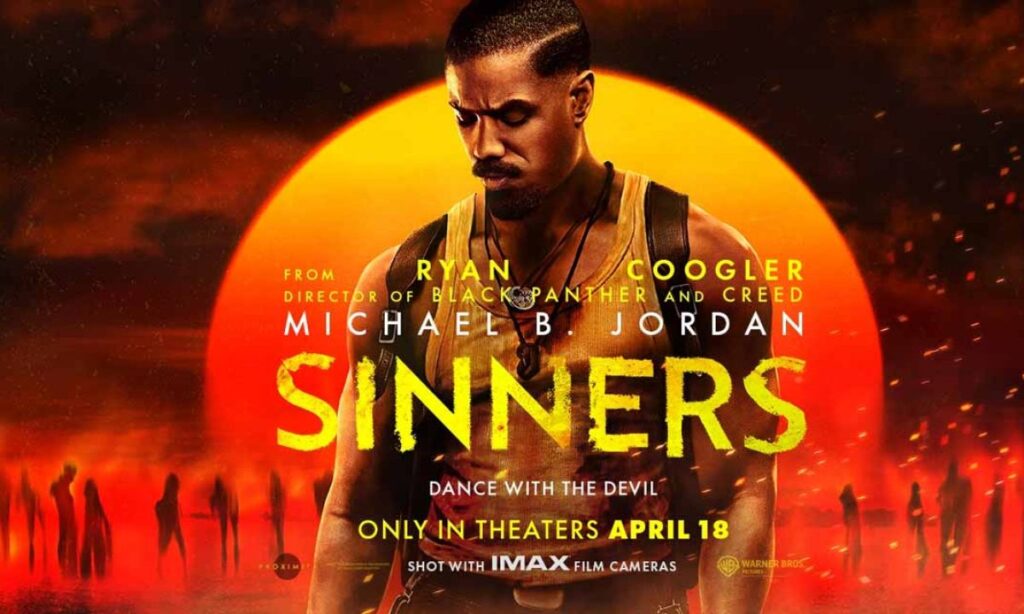
Ryan Coogler’s “Sinners” (2025) is a supernatural thriller with fangs, folklore, and a whole lot of style. Set in the deep South during the Jim Crow era, the film follows Sammie (Jalen Myles), a young blues prodigy with a mysterious gift, and the Smokestack Twins—Smoke and Stack (both played by Michael B. Jordan)—two gangster brothers on the run with more than just blood on their hands. The story unfolds over a tight 24-hour window, blending horror, music, and drama in a way that feels fresh, risky, and totally alive. I genuinely enjoyed Sinners—it’s ambitious, atmospheric, and filled with strong performances—but I’ve got some issues, especially with how things go off the rails in the third act. The suspense it worked so hard to build starts getting drowned out by gunfire and chaos. See why below.
Rating 7.8/10
**Spoilers Imminent**
What I Could Sink My Teeth Into:
I can tell Ryan Coogler wrote and directed this film with a lot of love and care. He’s done a great job constructing a whole world of characters and introducing the audience to a people’s way of life in a specific period. The film begins with the “In media res” technique which is one of my favourites. What is in media res? It’s a fancy way of saying the film starts in the middle or the end of the story, giving the audience a glimpse of what’s to come before starting at the proper spot. When the film begins its runtime, we see Sammie having already escaped the saw mill and gone to see his father to make a decision about his future. It then flashes back in time to explain the story of how he got there, which is what makes up the movie.
However, what’s more interesting, is that Sammie’s story is actually interjected right in the middle/end of the Smokestack Twins’ story. So, it’s kind of like a double layer effect. This greatly emphasizes the premise that we only get to see 24 hours in the lives of these interesting and endearing characters. It reminds the audience that we are only seeing snippets of the whole stories, the end of one and the start of another. We never see the Twins’ time in Chicago, but we can infer they joined and robbed both gangs due to how they dress differently. We only see glimpses of Sammie’s career, but we can assume he’s had a long and fulfilling life playing music. And we have no idea what Stack and Mary have gotten up to, but at least Sammie has been safe from them.
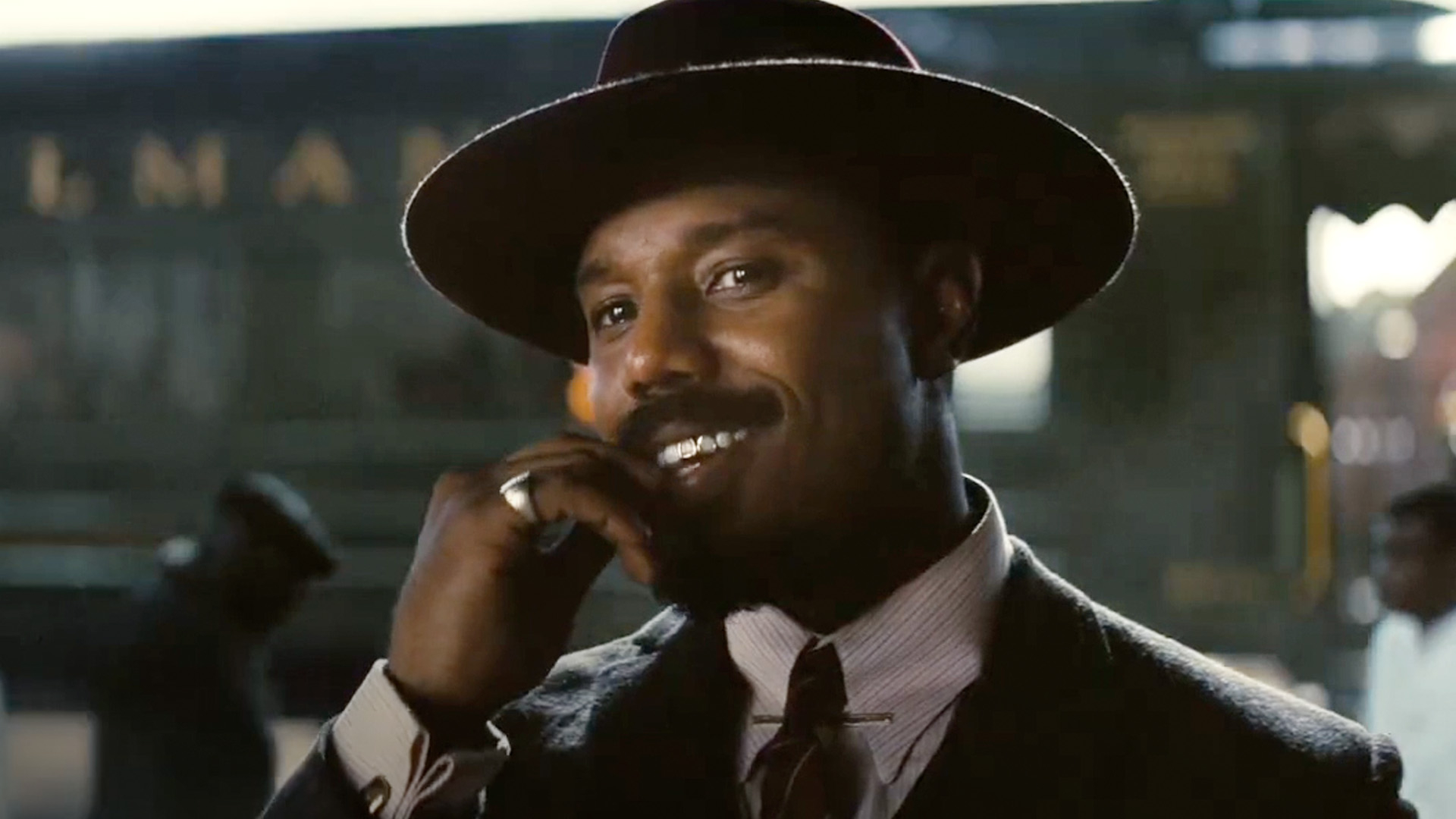
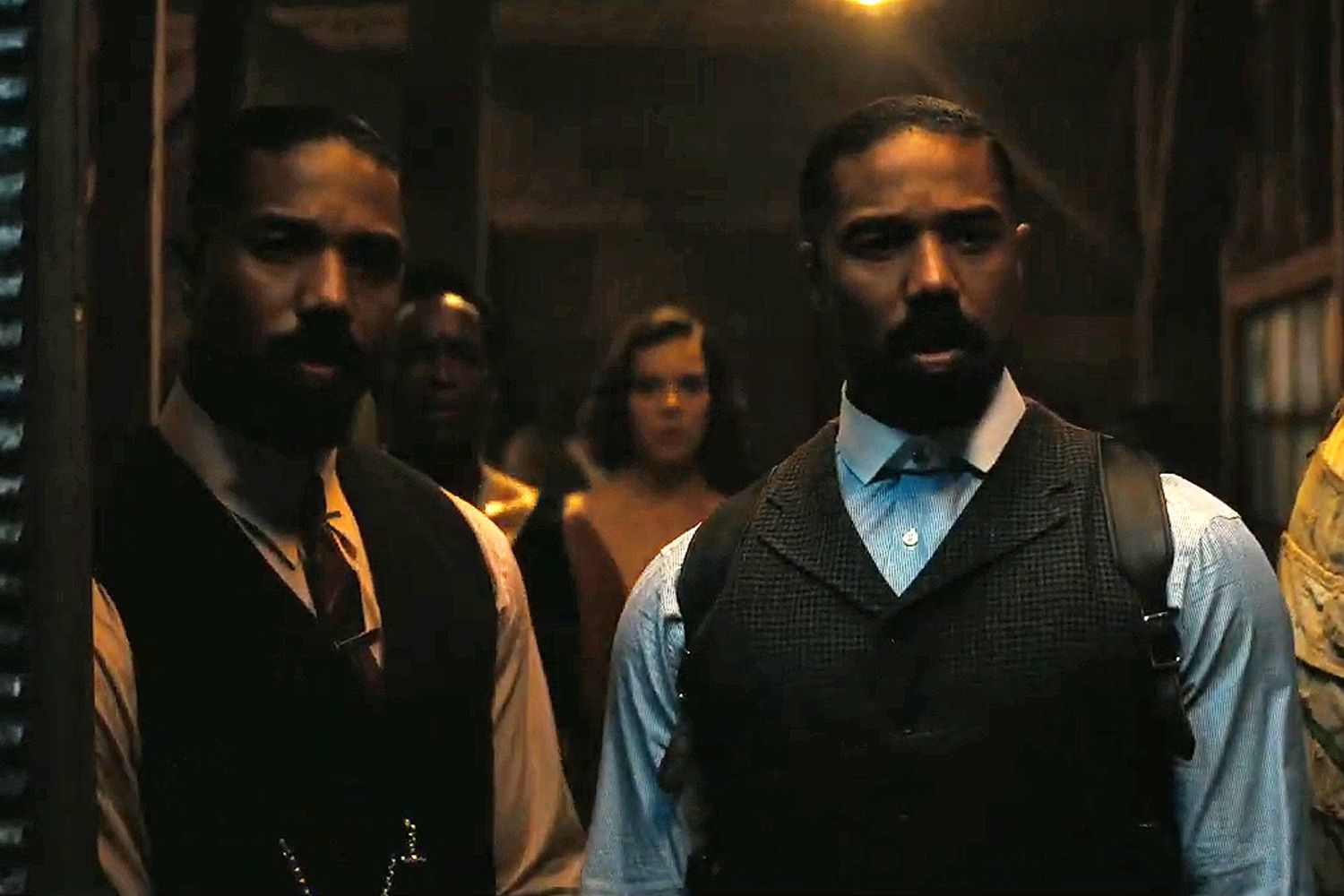
At first, I was a little bit intrigued but apprehensive that Michael B. Jordan could pull off the twins thing. Not that he’s not talented, it’s just hard to pull off acting like two different people in the same scene. The film cleverly gets around it by having them split up in the start and also “killing” off Stack around the second act. I must say though, I think this was fine because it just allowed more attention to be put on the scenes where they are together, which are really good. Michael B. Jordan has really good chemistry with himself. From the snake in the truck scene, we can tell they make a very good team together and keep each other safe. So, when they actually split up the audience gets nervous about the fact they can’t watch each other’s backs. In a short amount of time, Coogler and Jordan manage to convince the audience to care about these murdering and conniving gangsters.
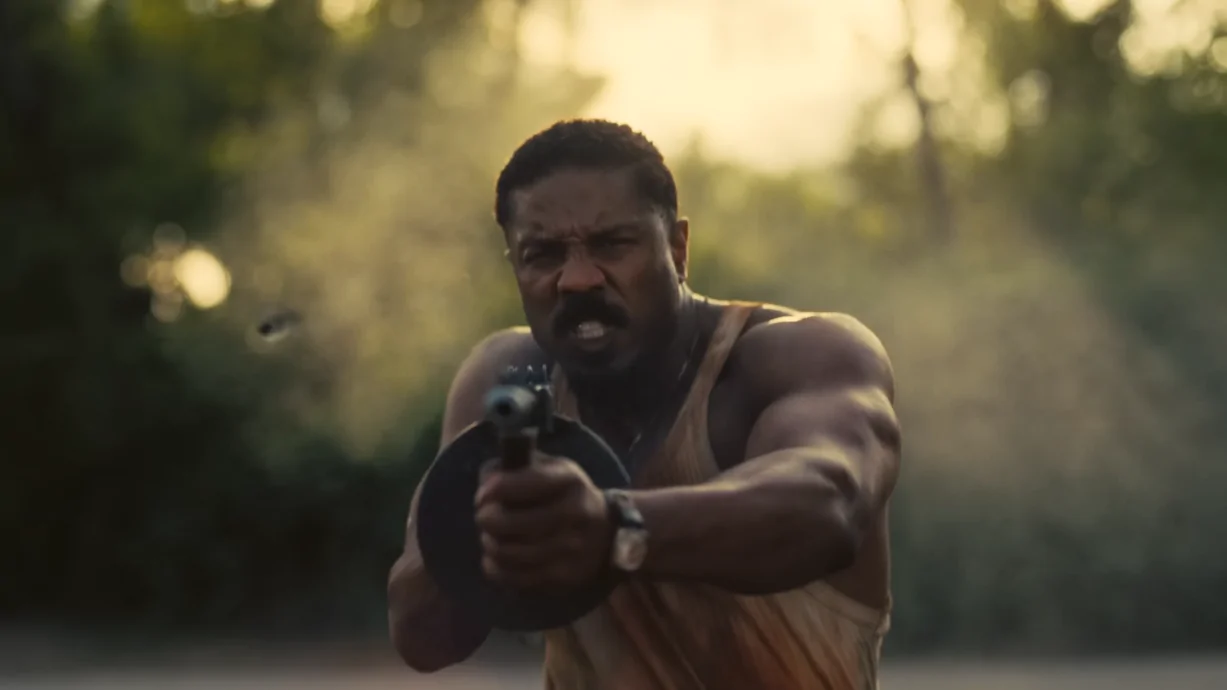
The idea that Smoke is always protecting Stack stays throughout the movie as well. In the third act we see Smoke standoff against the Klan members at daybreak, and the audience might wonder why they’re so blessed as to see two massacres in a row. So when it’s revealed that Stack was probably hiding from the sun in the Saw mill and Smoke didn’t want them to find him, it justifies an otherwise schlocky action sequence. Yeah, it was cool to see him pull out the BAR at the end, but without the knowledge that he’s protecting Stack and Mary, it feels tacked on.
This film is also wonderfully heavy on the music aspect. The soundtrack is actually insanely good. Some people might be put off by this aspect because they might’ve expected less music in a horror film. Generally, a combination of dissonant sound and silence is what inspires fear in people, so the constant breaking into The Blues is probably not what people saw coming in a vampire flick. However, I think it was genius. Not only does music reveal so much about the characters, the soundtrack itself sounds so full and engaging. Music acts as a character device primarily among the musicians (duh) in the film; Sammie, Delta Slim, Pearline, and Remmick.
Quick Detour: Coogler does a great job of showing the audience what The Blues is without ever needing to explain it. There’s a scene where Delta, Sammie, and Stack are in the car and Slim is describing how his friend is racially targeted by a group of white people. In pain and sorrow, he lets out a muffled cry and smacks the door of the car. Then he does it again and makes a rhythm and a melody out of that unresolved grief. That’s The Blues.
Anyway, for Sammie, music is not only his passion in life, but he literally has an otherworldly ability for it. This means the protagonist mirrors the antagonist, Remmick, the vampire. Remmick is likely an older vampire, as he’s able to sire and control thralls (minion vampires). This means that Remmick could’ve picked up his insane musical knowledge or ability at any point in his (probably) long life. Or, just being undead makes you a killer musician. Either way, we see both characters use music for similar, but ultimately different ends. Sammie uses it as not only a way to express his soul, but to connect and be accepted by the people in the Juke Joint. Remmick also tries to use music to connect with the people of the Juke Joint, but his underlying intentions are much more sinister.
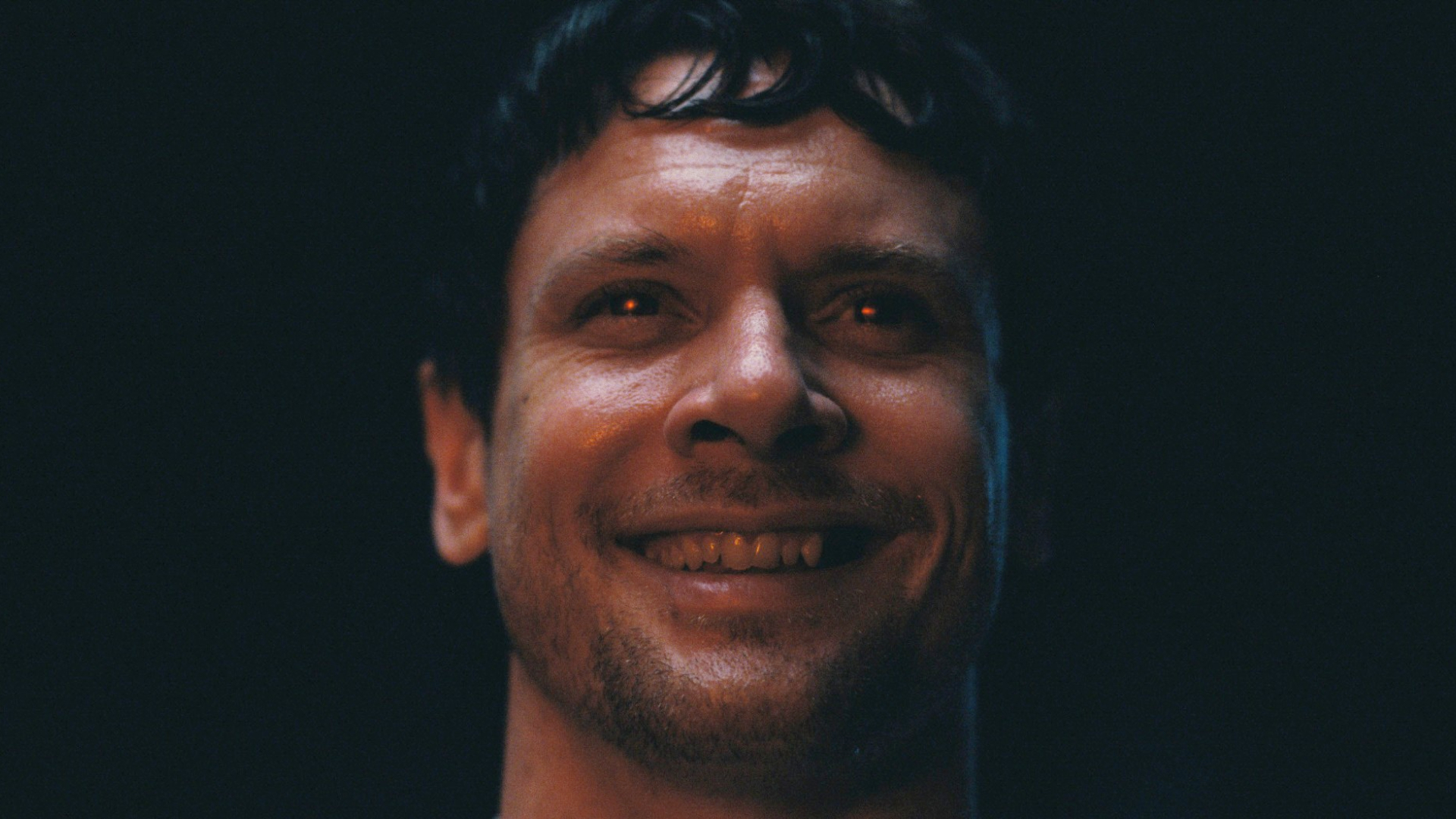
Sammie’s musical ability also brings him together with the people of his past and of his future. Remmick does not have this ability, but he wants it. He likely misses his own people who are long gone, and wants to connect with them again. We can infer this because when Remmick converts a bunch of the sinners, they go from singing The Blues in the Juke Joint, to singing Irish songs and dancing a jig around an open fire.This scene might’ve also convinced people that this wasn’t meant to be the scariest movie of the year, but I was having fun so I didn’t mind. However, these moments are also why the third-act feels like more of a tonal shift than a climax.
Where It Loses Its Bite:
Honestly, I thought this movie was pretty good, but it gets a little action-blockbuster-y in the third act. I heard a lot of hype about this movie. People were saying it’s one of the best films they’ve seen in theatres in years. I now think those people have been seeing the wrong films. Sinners was great, but I don’t think it’s gonna win any awards beyond best soundtrack. Which, I think it’s a strong contender for. I think this film does a great job of reigning in the chaos it creates, making it a tight finish after a loose third act.
In my opinion, the film takes a drastic turn as soon as Grace Chow (Li Jun Li) yells “Come on in” loud enough for Remmick to hear. I don’t like this moment because it blows the whole plot wide open. Up until this point, we have an interesting vampirical take on The Thing (1982) and we don’t get to see any more use of the specific rules they’ve established regarding where the vampires can and can’t enter. To me, that was the most interesting part of the film by far. The musical allegory and the visual effects were great and all, but I was more interested in seeing the cast outsmart the vampires. It seems like the film has a bunch of ideas and things it wants to be and has less of a cohesive identity. I mean, try explaining this movie in one sentence – it’s impossible without leaving something crucial out.
Another thing I was disappointed about, is that Sammie didn’t use the snapped off part of the guitar neck to stake Remmick in the heart. That would’ve been such a satisfying and symbolic payoff. The very thing Sammie thought brought the devil, is also what helps him vanquish it. This mirrors the notion that while Smoke brought Sammie to a place with vampires, he also protects him by telling undead Stack to stay away from him.
I’ve also got some gripes about Smoke’s standoff sequence at the end. When Smoke guns down the Klan in what seems like an over-the-top shootout, right after what was an already over-the-top shootout, it initially feels like action for action’s sake. But later, when we learn he’s covering for Stack, hiding from the sun inside the saw mill, the retroactive justification adds proper weight to the scene. However, audiences may not connect that and some people might not even stay long enough to see that after-credits scene. I found it weird they interjected the credits between two important scenes in the movie. Sammie’s career montage and the reveal that Stack and Mary are undead. I think the credits should’ve come at the very end and it was a weird stylistic choice. It would’ve definitely made the third act seem more purposeful and complete if those scenes followed each other.
Last Bites:
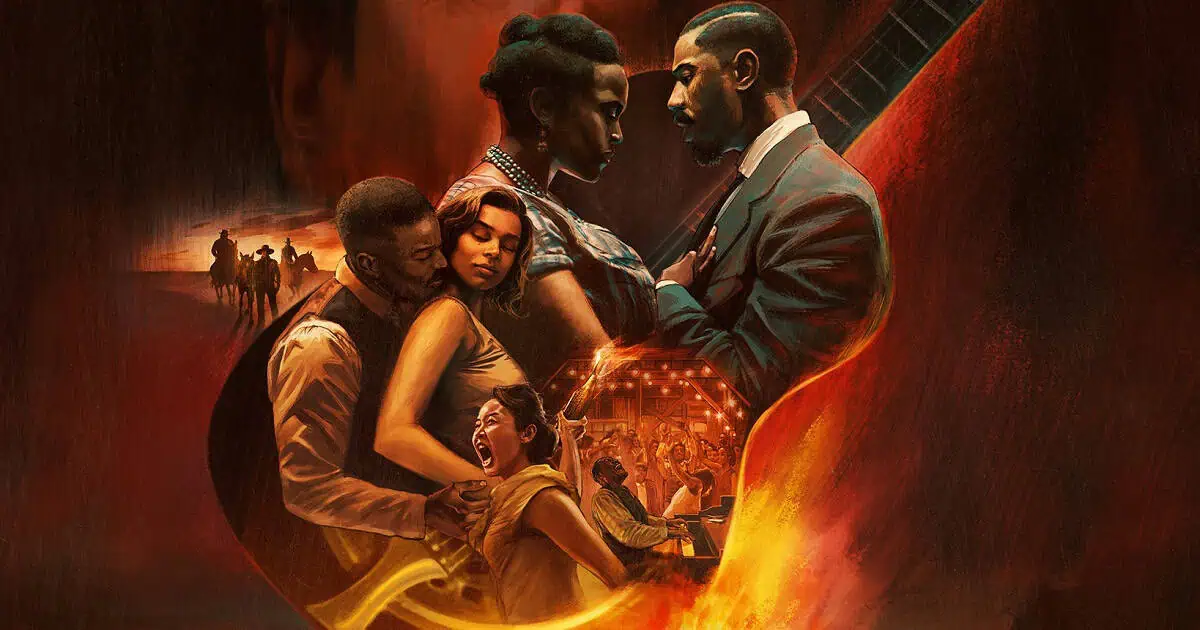
Ultimately, Sinners blends together cool tropes, rich character work, and a memorable soundtrack into something ambitious, but imperfect. The messy third act doesn’t ruin the experience, but it does undermine the suspense it was building up throughout the film. Still, Coogler’s vampire-blues hybrid deserves credit for everything it excels in and for providing people a unique theatre-going experience. Thanks for reading!
Available now in theatres, with the soundtrack streaming on major platforms.